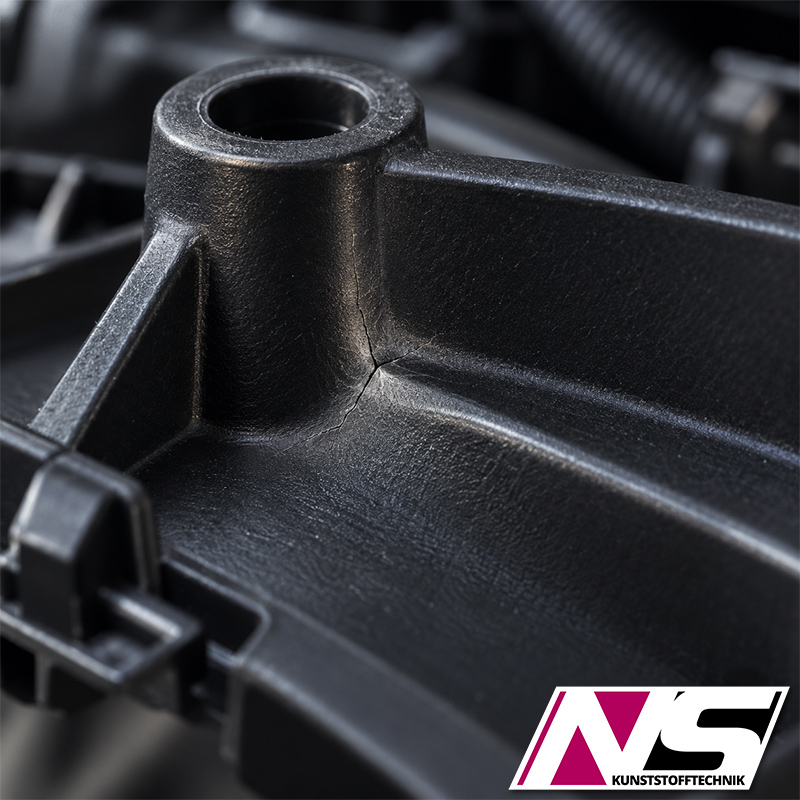
Temperature control doesn't stop at melt temperature. In reality, the cooling phase is where the success or failure of a molded part is often decided!
After molten plastic fills a mold, the next phase quietly determines whether the part succeeds or fails. Cooling controls how the material solidifies, how the dimensions stabilize, and how internal stresses develop. If the cooling rate is uneven or poorly controlled, defects quickly follow. Warpage, sink marks, shrinkage variation, and dimensional instability often trace back to what happens in this stage.
Cooling speed also shapes the internal structure of the polymer. Semi-crystalline materials such as polypropylene, nylon, or POM respond strongly to cooling conditions. Faster cooling tends to limit crystal growth and leads to a more amorphous structure. Slower cooling allows crystals to form more completely, which can increase stiffness, chemical resistance, and thermal stability.
That balance creates a constant tradeoff in production. Aggressive cooling shortens cycle time but may compromise part stability. Slower cooling improves structure and dimensional control but reduces throughput. The real challenge for molders is not simply cooling faster or slower. It is delivering uniform, predictable heat removal throughout the part and across every cycle.
This is why mold temperature control, cooling channel design, and process monitoring matter so much. When cooling is optimized, parts come out of the mold stable, consistent, and ready for the next step without surprises. When it is not, even a perfectly filled mold can still produce a flawed part.
How do you approach cooling optimization in your molding process? What strategies have delivered the biggest improvements in your production lines?