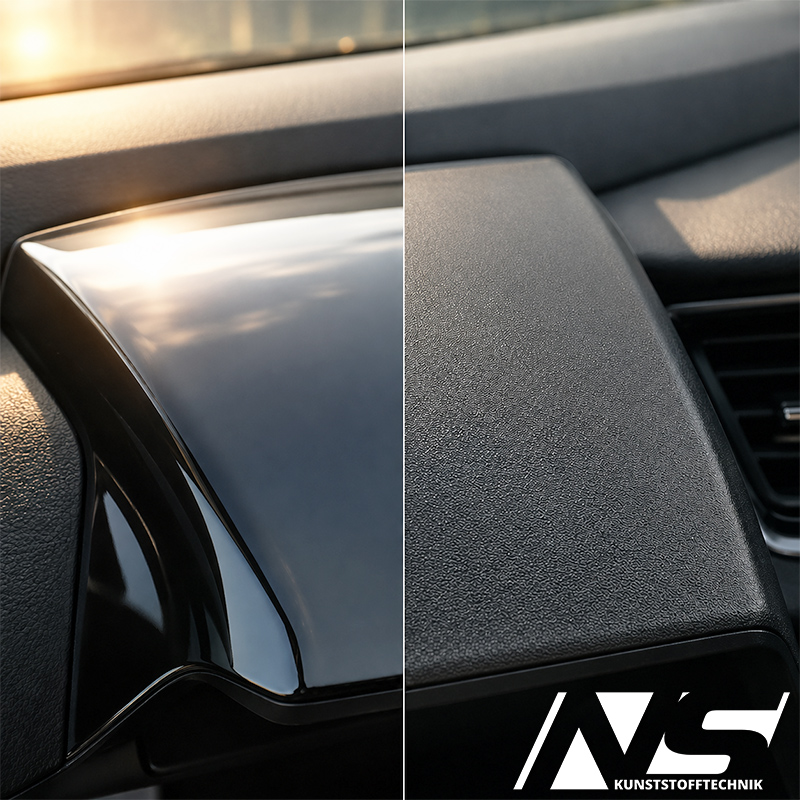
Same part. Same material. So, what changed? (Hint: it plays a defining role in both the look and performance of injection molded parts.)
During molding, molten plastic replicates the exact texture of the tool surface it contacts. A polished surface produces a glossy finish that reflects light, while a textured surface diffuses light, creating a matte appearance.
We're talking of course about surface finish, where design intent meets manufacturing reality.
In production, surface finish decisions go far beyond aesthetics. A well-selected texture enhances perceived quality and can mask visual defects such as flow lines or tool marks. More importantly, it directly impacts functionality. Surface texture influences grip, paint adhesion, and even safety. Textured finishes, for example, can improve slip resistance and support gas venting during the molding process, reducing defects.
The industry commonly relies on SPI surface finish standards, ranging from high-gloss A grades to rough D grades. Choosing the right specification is not always straightforward, as it depends on material behavior, part geometry, and end-use requirements.
This is where experience matters. With deep expertise in both tooling and high-volume production, NS-K supports customers in making informed surface finish decisions early in the process. The goal is simple, align design, function, and manufacturability to get it right the first time. 🎯
If you’re designing a new part or refining an existing one, how confident are you in your surface finish choice? Let’s discuss where the right texture could improve both quality and performance.