Some of the strongest automotive assemblies are created without a single screw, clip, or drop of adhesive.
Modern automotive components continue to become more compact, more complex, and more highly integrated. That creates a challenge for engineers because not every geometry can be produced as a single injection molded part.
This is where ultrasonic welding becomes an invaluable manufacturing process.
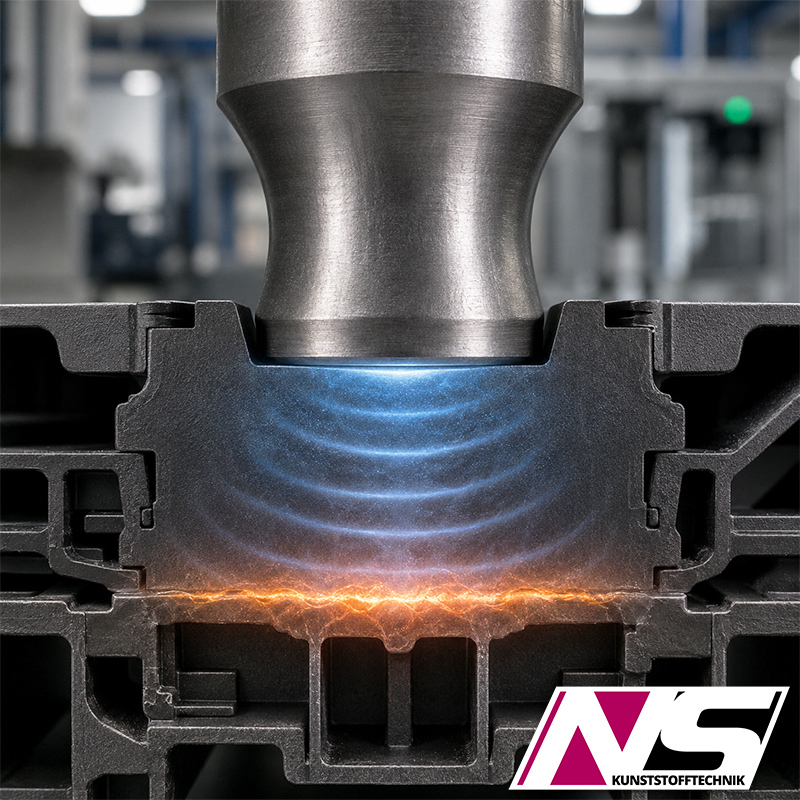
During the Design for Manufacturing stage, engineers may determine that a component should be molded as two separate pieces before being permanently joined. Rather than relying on screws, clips, or adhesives, ultrasonic welding uses high-frequency mechanical vibrations and carefully controlled pressure to create a molecular bond between compatible thermoplastics.
The process itself is remarkably fast. Vibrations generated at tens of thousands of cycles per second create localized heat exactly where the two parts meet. The plastic briefly melts at the joint, pressure is maintained, and once the vibration stops, the material rapidly solidifies into a strong, hermetically sealed assembly. In many applications, the entire weld cycle takes less than 0.2 seconds.
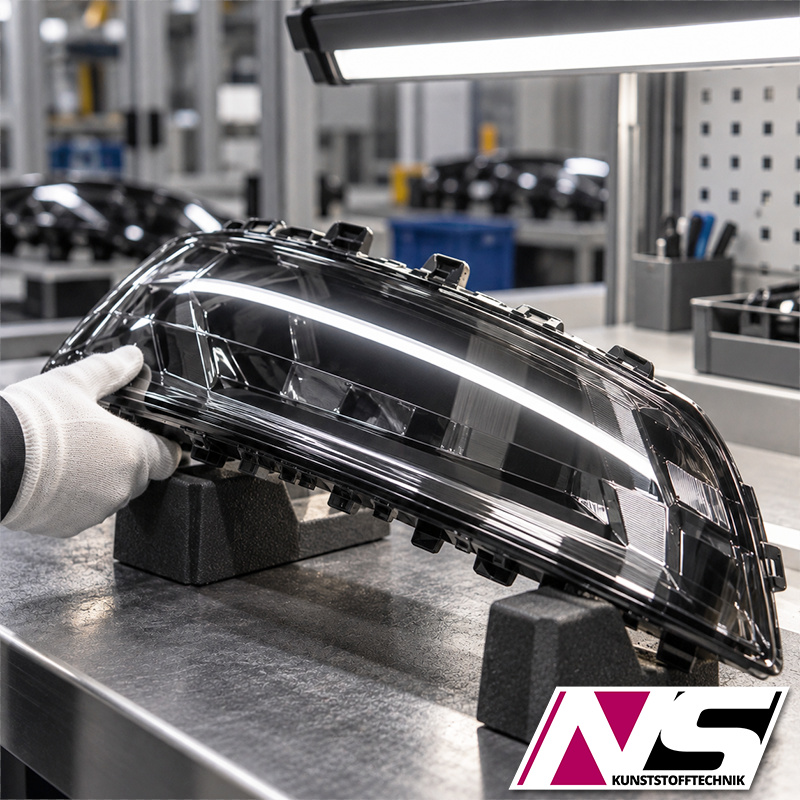
For automotive manufacturers, the benefits are significant. Ultrasonic welding produces clean, repeatable joints without additional fasteners or curing time, making it ideal for sensor housings, fluid reservoirs, electronic enclosures, air duct systems, lighting assemblies, and countless other components where strength, sealing performance, and production speed all matter.
In high-volume automotive manufacturing, fractions of a second matter. So does every joint.
Where have you seen ultrasonic welding deliver the biggest advantage: part performance, production efficiency, or design flexibility?